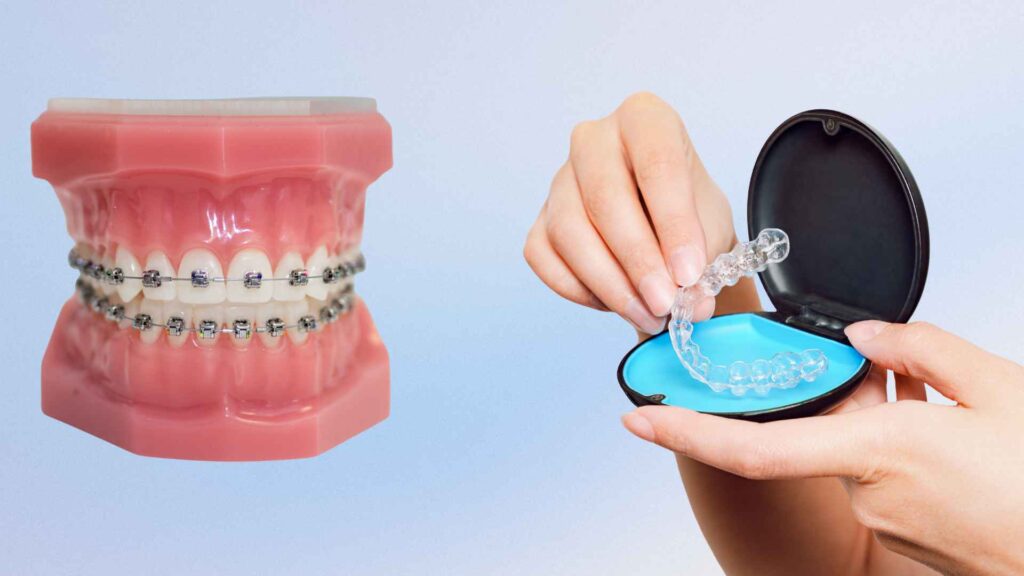
Ask most people when the “right time” for braces is, and you’ll get the same answer: school age. Braces, headgear, colorful rubber bands, awkward class photos. That’s the image most of us grew up with.
But walk into any modern dental clinic in Dhaka today and you’ll see something different. Professionals in their late 20s. Parents dropping off their kids and then quietly asking about their own teeth. Business owners in their 40s who finally have the time — and honestly, the money — to deal with something they’ve put off for years.
Some of these adults never got braces as teenagers. Others did, years ago, and watched their teeth slowly drift back out of place after they stopped wearing a retainer. And a lot of them just reached a point where they looked in the mirror one day, noticed a tooth that wasn’t quite where it used to be, and thought: can I even still fix this?
You can. And it’s a lot more common than you’d think.
Table of Contents
- Why Your Teeth Keep Shifting, Even as an Adult
- The Hidden Cost of Living with a Crooked Smile
- What Happens If You Ignore Misaligned Teeth
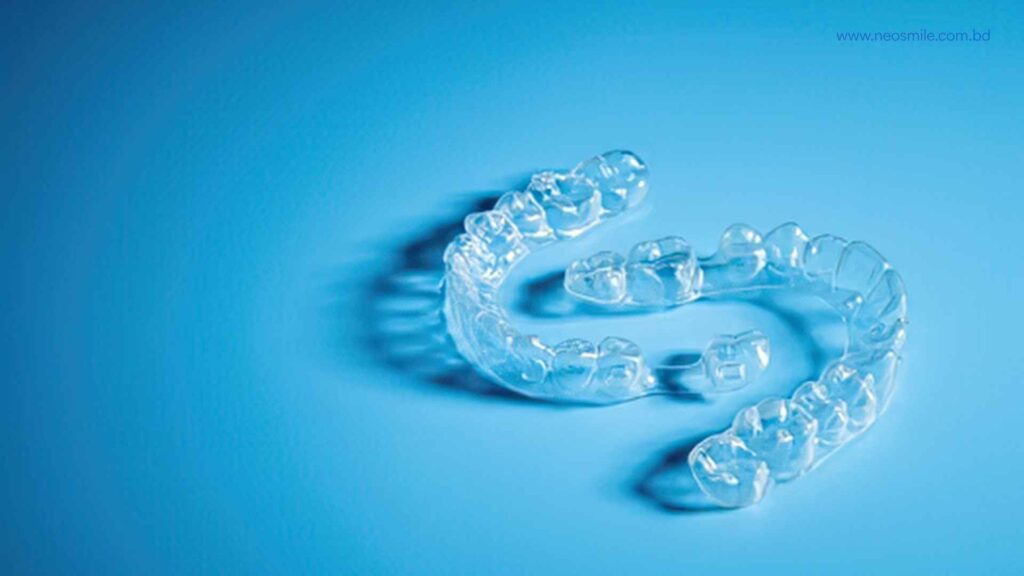
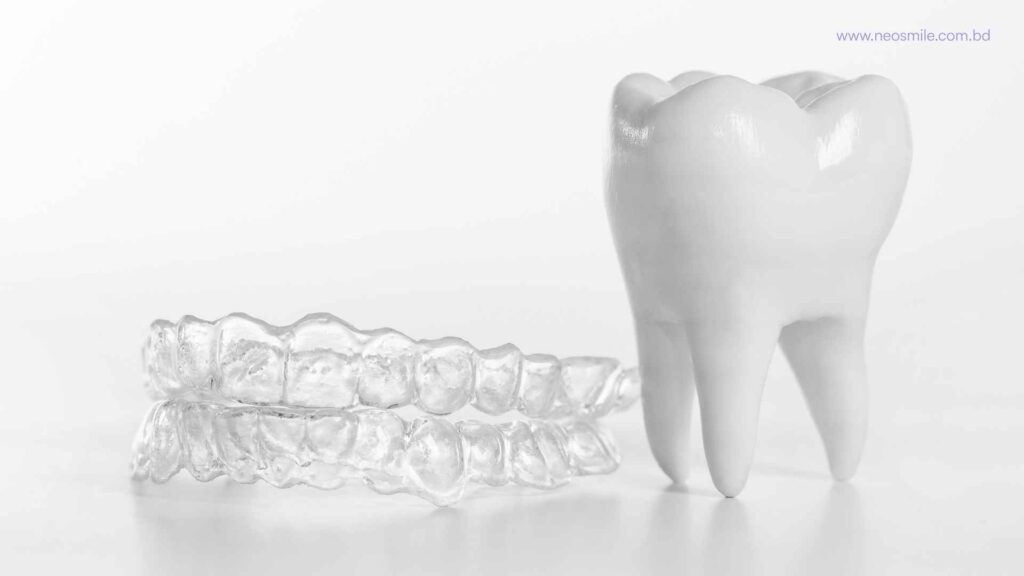
- How Clear Aligners Actually Work
- Traditional Braces vs Clear Aligners
- The Clear Aligner Journey, Step by Step
- What to Expect During Treatment
- Are You a Good Candidate?
- Common Myths About Adult Orthodontics
- Common Mistakes to Avoid
- How to Choose the Right Clinic for Clear Aligners in Dhaka
- FAQs
Why Your Teeth Keep Shifting, Even as an Adult
Here’s something most people don’t realize: teeth are never really “done” moving. We treat them like they’re fixed in place once we hit adulthood, but they’re actually shifting the entire time, just slowly enough that you don’t notice day to day.
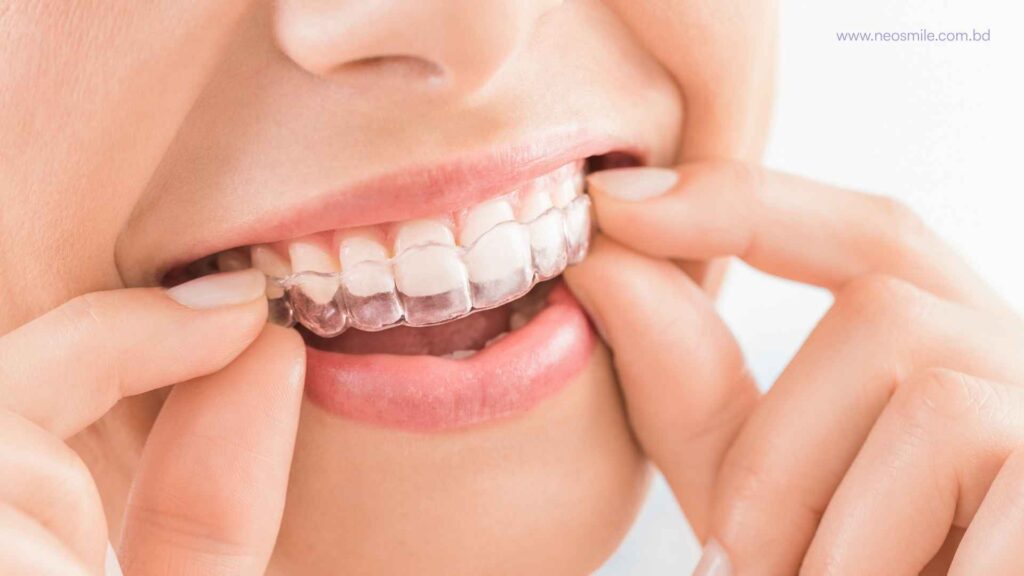
A few things tend to speed this up:
Simple wear and tear from decades of chewing and talking puts constant low-level pressure on your teeth, and that pressure adds up over the years. Losing a tooth — to decay, an accident, gum disease, whatever the cause — leaves an empty space, and the teeth next to it don’t just stay put. They lean into it. A bite issue that was barely noticeable as a teenager can also become more obvious in your 30s, simply because your jaw and the tissue around it keep changing long after you stop growing.
Then there’s grinding. If you’ve ever woken up with a sore jaw after a stressful week, you’re probably clenching or grinding at night without realizing it, and over time that genuinely reshapes and shifts teeth. Even wisdom teeth can play a role well into adulthood, pushing against neighboring teeth as they try to come in.
None of this means something went “wrong” when you were younger. It’s just what teeth do, given enough time.
The Hidden Cost of Living with a Crooked Smile
There’s a part of this that doesn’t get talked about enough, and it has nothing to do with cavities or bite mechanics.
Think about how often your smile actually shows up in daily life — job interviews, client calls, wedding photos, a first date, a video call where you can’t hide behind a mask anymore. A lot of adults with crooked teeth develop small habits without even clocking it: covering their mouth when they laugh, keeping their lips together for photos, holding back a full smile in a meeting. Do that for ten or fifteen years and it quietly becomes part of how you carry yourself.
This matters more in some jobs than others. If you’re in sales, hospitality, healthcare, teaching — anywhere you’re building trust with people quickly — a confident smile does some of that work for you. Not because crooked teeth make anyone less capable. It’s the self-consciousness that gets in the way, that split second of holding back.
To be clear, you don’t need straight teeth to be confident or good at your job. But if “it’s too late” or “that’s just for teenagers” is the thing that’s been stopping you, it’s worth knowing that reasoning doesn’t really hold up anymore.
What Happens If You Ignore Misaligned Teeth?
It’s easy to file crooked teeth under “cosmetic” and move on. But an untreated bite issue doesn’t just sit there quietly — it can cause real problems over time.
Eating gets less efficient. When your bite doesn’t line up the way it should, chewing takes more effort than it should. A lot of people end up unconsciously avoiding tougher, more fibrous foods simply because they’re annoying to chew properly.
Cleaning gets harder, and that catches up with you. Overlapping or crowded teeth create spots a toothbrush just can’t reach well. Food gets trapped, bacteria builds up, and over months and years that translates into more cavities, more gum inflammation, and breath problems that mouthwash won’t fully fix.
Your jaw pays for it too. A misaligned bite forces your jaw muscles to compensate constantly, which can show up as tension, clicking, or general discomfort — especially after long days of talking or eating.
Speech can be affected. In more noticeable cases of spacing or misalignment, certain sounds that rely on the tongue meeting the front teeth can come out slightly different than intended.
And there’s a bigger-picture health angle. Gum disease doesn’t necessarily stay in your mouth. The bacteria involved can get into your bloodstream, and researchers have looked into possible links between long-term gum inflammation and broader cardiovascular concerns. It’s one more reason dentists push people to deal with alignment and gum health sooner rather than later — the longer it sits, the more it compounds.
How Clear Aligners Actually Work
It looks deceptively simple — a clear plastic tray you pop in and out. But there’s a fair amount of engineering behind that simplicity.
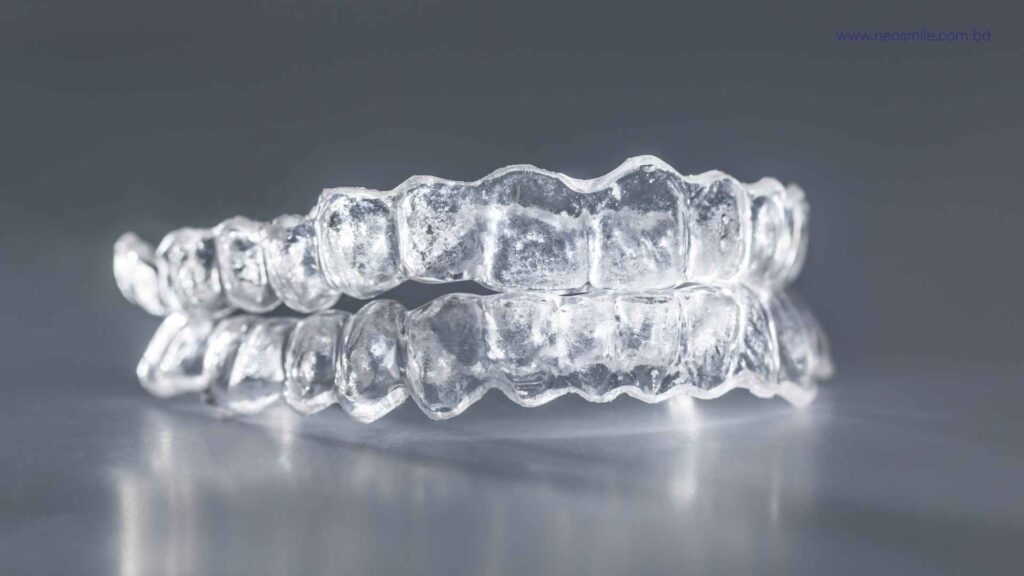
It starts with a 3D scan of your teeth, essentially a digital map of your current smile. From there, your dentist plots out exactly how your teeth need to move, step by step, to get from where they are now to where they should end up. Each of those steps becomes its own tray — subtly different from the one before it.
You wear each tray for roughly one to two weeks, then move on to the next in the sequence. Every new tray nudges specific teeth a little further along the path that was mapped out. By the time you’ve gone through the full set, your teeth have gradually worked their way into position — no metal, no wires, no monthly tightening appointments.
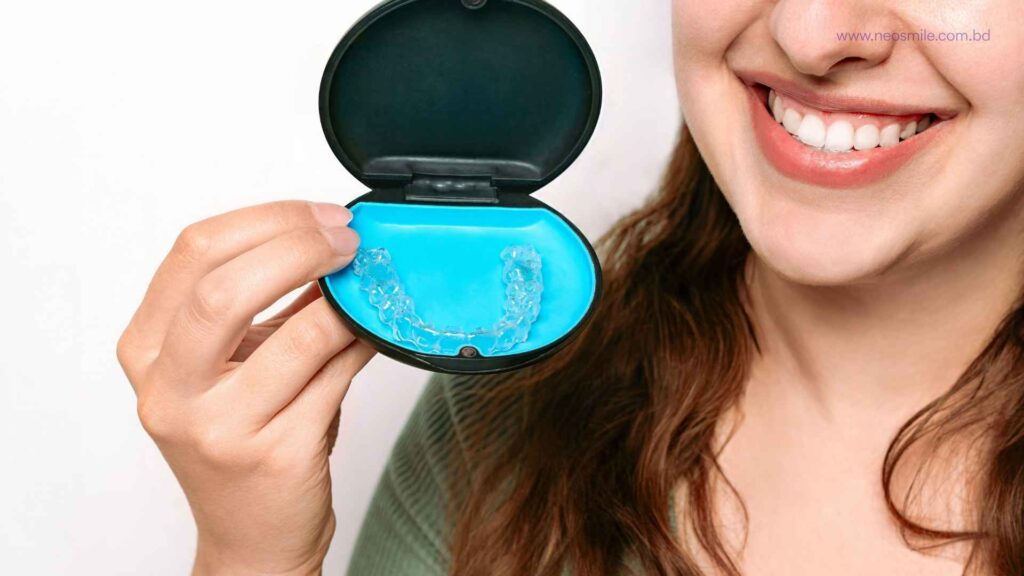
Because everything is built from a precise digital model of your mouth, the fit is snug and predictable, which is also why your dentist can usually give you a fairly clear timeline right from the first consultation.
Traditional Braces vs Clear Aligners
Which one you go with really comes down to your bite, your lifestyle, and how much you care about people noticing.
| Traditional Metal Braces | Clear Aligners | |
| Visibility | Clearly visible on teeth | Nearly invisible |
| Removable? | No, fixed to teeth | Yes, removable for eating and cleaning |
| Comfort | Can cause irritation from wires/brackets | Smooth plastic, generally more comfortable |
| Best for | Complex bite corrections | Mild to moderate misalignment |
| Diet restrictions | Yes, avoid sticky/hard foods | None — remove aligners to eat anything |
| Maintenance | Careful brushing needed around brackets | Just brush and soak the trays |
| Professional/social impact | More noticeable in meetings, photos | Discreet, barely noticeable |
| Appointment frequency | Regular in-person adjustments | Fewer visits, more predictable schedule |
Most working adults in Dhaka lean toward Clear Aligners for a pretty obvious reason: you can eat what you want, talk in meetings without a mouth full of metal, and go through a normal day without it being anyone’s business but yours.
That said, traditional braces still win out for more complicated bite corrections that need more force than aligners can comfortably apply. This isn’t really a “which is better” question — it’s a “which fits your case” question, and that’s what the consultation is for.
The Clear Aligner Journey, Step by Step
Knowing what actually happens tends to make the whole thing feel a lot less intimidating.
- Consultation. Your dentist looks at your teeth, hears out what’s bothering you, and figures out whether aligners make sense for your situation.
- Digital scan and planning. A 3D scan maps your teeth, and your dentist builds out the full sequence of movements from your current smile to your target one.
- Reviewing the plan. Most clinics can show you a simulation of how your smile is expected to change stage by stage — useful for knowing what you’re signing up for.
- Getting your aligners. Your custom trays get manufactured based on that plan and handed over, usually in batches.
- Wearing and switching. You wear each tray for the hours your dentist recommends, then swap to the next one every one to two weeks.
- Check-ins. Your dentist checks progress periodically, adjusting the plan if something’s not tracking as expected.
- Retention. Once your teeth land where they’re supposed to be, a retainer keeps them there — because yes, they can drift back if you skip this part.
What to Expect During Clear Aligner Treatment
Time. This depends entirely on your case. A small gap or mild crowding might resolve in a few months. More involved corrections can take over a year. There’s no one-size-fits-all number here.
Comfort. Expect mild pressure for a day or so after switching trays — not sharp pain. No metal means no cuts on your cheeks or lips, which is usually the first thing people notice compared to traditional braces.
Cost. In Dhaka, Clear Aligner treatment generally starts from around Tk 150,000, though the final number depends on how complex your case is and how many trays you’ll need. A consultation and scan will get you an actual number, not a guess.
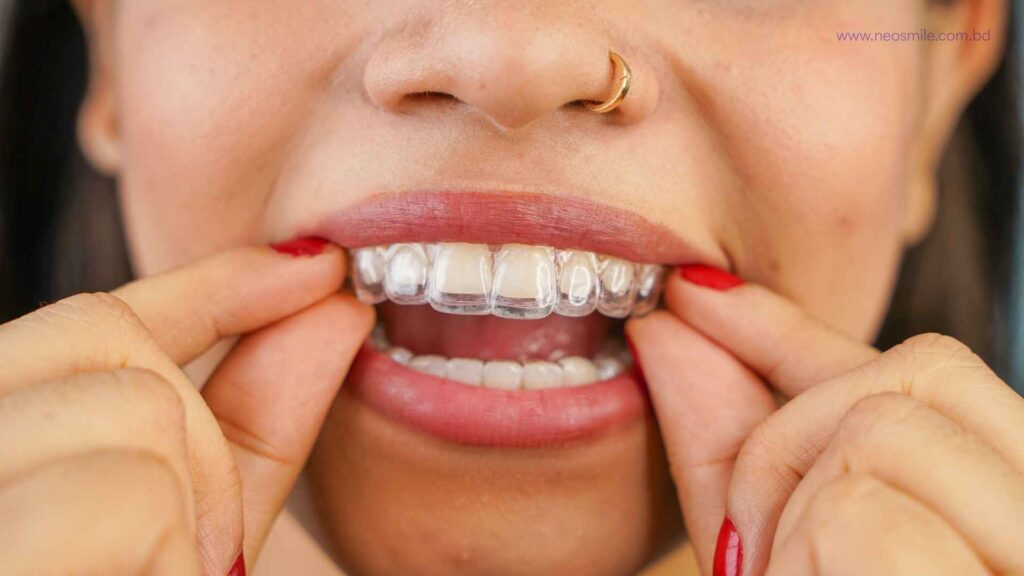
Upkeep. You’ll wear the aligners 20–22 hours a day, basically all the time outside of eating and cleaning. Daily care is straightforward — brush your teeth as usual, rinse the trays, done. No special tools needed to work around brackets.
Fitting it into life. Because you can take them out, aligners tend to slot into a busy adult schedule far more easily than fixed braces — client dinners, travel, long workdays. The one habit you do need to build is putting them back in soon after eating.
Are You a Good Candidate for Clear Aligners?
Most adults are, but it’s worth being honest about what “good candidate” actually means rather than just eyeballing your smile in the mirror. Generally, you’re a solid fit if you have mild to moderate crowding, gaps, or bite issues, you’re realistic about wearing the trays consistently, and your gums are in reasonably good shape (or you’re willing to treat any issues first).
Advanced gum disease, significant bone loss, or certain complex bite patterns might mean traditional braces, a combined approach, or treating your gums first before any tooth movement starts. Age, on its own, almost never disqualifies you — your oral health matters far more than how many birthdays you’ve had.
This is really the whole point of a proper consultation and scan before anyone commits to a plan: it’s the only way to actually know what your case needs, rather than guessing.
Common Myths About Adult Orthodontics
I’m too old for this. Not true. If your gums and jawbone are healthy, age by itself doesn’t rule anything out.
It’ll take forever to see anything change. Full treatment can run several months to over a year, sure — but a lot of people notice visible movement within the first couple of months.
Aligners don’t work as well as metal braces. For mild to moderate cases, they can be just as effective. It’s not really a competition — it’s about matching the tool to the case.
Once I’m done, I’m done forever. Skip the retainer and your teeth can drift back. The retention phase isn’t optional if you want the results to last.
It’s just cosmetic, so why bother. As covered above, ignoring misalignment carries real risk — harder cleaning, more cavities, gum issues, sometimes jaw discomfort. This is health, not just appearance.
Common Mistakes Adults Make Before Starting Orthodontic Treatment
| Mistake | Why It’s a Problem |
| Assuming they’re “too old” | No upper age limit exists — oral health is what actually matters |
| Buying aligners online, skipping the dentist | Without proper scans and supervision, teeth can move the wrong way |
| Ignoring existing gum issues | Gum health needs addressing first for safe tooth movement |
| Picking a provider based on price alone | Cheap, unsupervised treatment often costs more later through redo work |
| Not asking for a full timeline upfront | Leads to frustration mid-treatment — ask for a month-by-month plan early |
| Wearing aligners inconsistently | Slows everything down and stretches out total treatment time |
| Skipping the retainer phase | Undoes months of progress as teeth shift back |
How to Choose the Right Clinic for Clear Aligners in Dhaka
Not every provider offers the same level of care, so it’s worth asking a few pointed questions before committing:
Is a qualified dentist actually designing and supervising your treatment plan, or is it largely automated? Are they using a proper 3D digital scan rather than old-style physical impressions? Can they show you a simulation of your expected results before you commit? What exactly is included in the quoted price — consultations, scans, extra trays if needed, retainers — and what’s billed separately? And realistically, is the clinic’s location and schedule something you can stick to for regular check-ins?
That last one matters more than people expect. Consistency is most of what makes treatment work, and a clinic you can’t easily get to becomes a clinic you start skipping.
FAQs
Is it really not too late to get Clear Aligners as an adult? Correct — as long as your gums and jawbone are healthy, there’s no age cutoff. Plenty of patients start in their 30s and 40s.
Do Clear Aligners hurt? Mild pressure for a day or two after a new tray, generally. Not sharp pain — that’s a sign something’s actually happening.
How much do Clear Aligners cost in Dhaka? Starting from around Tk 150,000, depending on your case. A consultation gives you the real number.
Can I eat normally with Clear Aligners? Yes. Take them out, eat whatever you want, put them back in. No restrictions at all.
Do I need a retainer afterward? Yes — without one, teeth can shift back over time, which defeats the point of treatment.
How long does the whole process usually take? Anywhere from a few months to over a year, depending on complexity.
Can I switch from braces to aligners partway through? Sometimes, depending on how far along you are and your specific bite. Worth a direct conversation with your dentist.
Do aligners work for every case? Best for mild to moderate misalignment. More complex bites may need braces or a combined approach — your dentist will tell you which after a proper look.
Your Smile Doesn’t Have an Age Limit
Whether you’re 25 or 45, a straighter smile is still on the table. Teeth move regardless of your age, and treatment has gotten a lot easier to fit into an adult life than it used to be. If “braces are for teenagers” is the only thing holding you back, that’s really not a good enough reason anymore.
Ready to find out if Clear Aligners are right for you? Book a consultation with NeoSmile in Gulshan 2, Dhaka, and get a personalised treatment plan from our dental team.
📱 WhatsApp us | 📍 Road 95, Plot 2/A, Gulshan 2, Dhaka