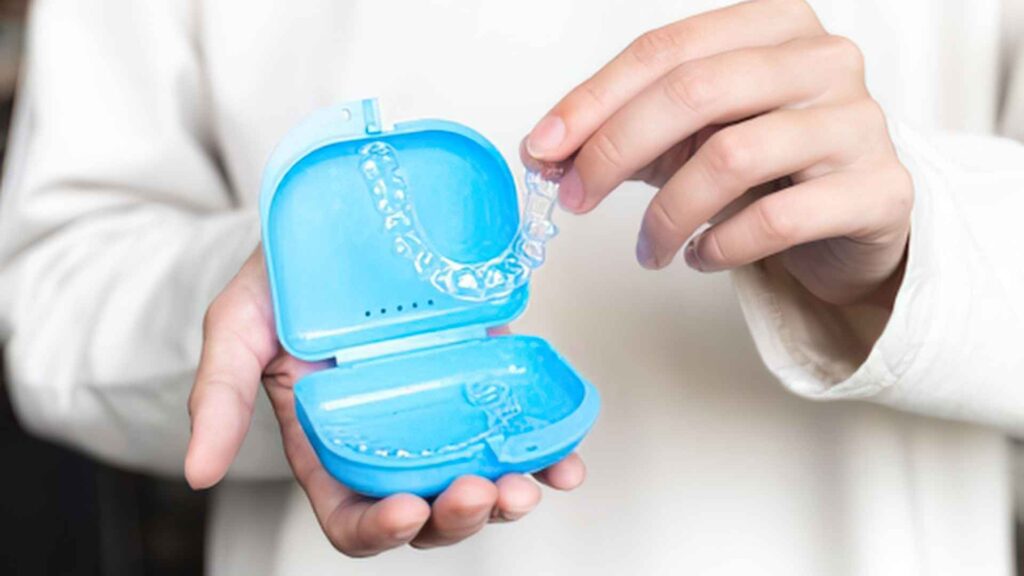
If you were a teenager any time in the last few decades, you probably remember the term. Brace face. Metal mouth. Whatever your school called it, it wasn’t a compliment, and everyone with braces knew it.
For a long time, that was just the deal. If your teeth needed straightening, you accepted the nickname, the awkward photos, and a couple of years of feeling a little self-conscious every time you smiled. There wasn’t really another option.
That’s changed. Faster than most people realize, clear aligners have gone from a niche, adult-only product to something a huge number of students and young adults are choosing instead of metal braces — precisely because they don’t want to deal with any of that. And in Dhaka, where university life, internships, and a very active social calendar all revolve around how you show up in person and on camera, that shift makes a lot of sense.
Table of Contents
- Why “Brace Face” Became Something Teens Actively Avoid
- The Global Shift from Braces to Clear Aligners
- Why This Matters More for Students and Young Professionals
- Traditional Braces vs Clear Aligners
- How Clear Aligners Actually Work
- The Clear Aligner Journey, Step by Step
- What to Expect During Treatment
- Are You a Good Candidate?
- Common Myths About Clear Aligners for Students
- Common Mistakes to Avoid
- How to Choose the Right Clinic for Clear Aligners in Dhaka
- FAQs
Why “Brace Face” Became Something Teens Actively Avoid
It’s worth actually unpacking why this nickname stuck around for so long, because the reasons behind it explain a lot about why clear aligners caught on so fast once they became available to a younger crowd.
Metal brackets and wires are, by design, hard to miss. They catch the light in photos. They show up on video calls. They’re right there every time you laugh, mid-conversation, mid-presentation. For an age group that’s already navigating a lot of self-consciousness about how they look — school photos, first dates, university orientation, job interviews — having something stuck to your teeth that you can’t take off for two years is a genuinely big deal, even if adults sometimes brush it off as “just braces.”
Add in the physical side: brackets and wires can cut into your cheeks, especially in the first few weeks or right after an adjustment. Certain foods are off-limits entirely. And there’s the sound of it, too — plenty of people with braces get self-conscious about how they talk differently for a while.
None of this means braces are a bad option. For a lot of complex cases, they still are the right tool. But if you’re a student or young professional who mainly needs mild to moderate correction, it’s easy to see why an option that skips most of that list would be appealing.
The Global Shift from Braces to Clear Aligners
This isn’t just a feeling — it shows up clearly in the numbers, and in how orthodontists themselves describe their own practices.
One orthodontics professor at a major dental school in the US has talked about how, just five years ago, his practice was essentially 100% traditional braces. Today, roughly 80% of his patients are on clear aligners instead. That’s not a small shift. That’s most of an entire practice changing direction within half a decade.
Broader industry data backs this up. Clear aligner manufacturers have reported that the number of teen and pre-teen patients has, in recent years, grown even faster than the number of adult patients — a reversal from when aligners were originally marketed almost exclusively to grown adults with the money and patience for a “premium” option. Internationally, aligner adoption has grown by well over 40% year over year in some reported periods, alongside solid double-digit growth in North America specifically.
To be clear, these are global and North American figures, not local Dhaka statistics — but they point to something real: clear aligners have stopped being a niche adult product and have become mainstream, including for younger patients who care a lot about how they look while they’re going through treatment.
Why This Matters More for Students and Young Professionals
If you’re in university, in your first job, or somewhere in that stretch of life where your social calendar, your class presentations, and your LinkedIn profile picture all matter at the same time, the “invisible” part of clear aligners does a lot of heavy lifting.
Think about what a typical few months look like for a 19 to 25 year old in Dhaka right now: group project presentations, internship interviews, campus events, weddings (there’s always a wedding), a steady stream of phone camera moments that end up on someone’s Instagram whether you planned for it or not. Metal braces don’t pause for any of that. Clear aligners mostly do — remove them for a big meal, a job interview headshot, or a photo, and put them back in right after.
There’s also a practical fit-into-life angle that matters more the busier you get. Aligners don’t require you to avoid your favorite street food or skip out on chewy, sticky snacks with friends. You take them out, eat normally, brush, and put them back in. For someone juggling classes, a part-time job, and a social life, that flexibility is often the deciding factor over aesthetics alone.
Traditional Braces vs Clear Aligners
| Traditional Metal Braces | Clear Aligners | |
| Visibility | Clearly visible on teeth | Nearly invisible |
| Removable? | No, fixed to teeth | Yes, removable for eating and cleaning |
| Comfort | Can cause irritation from wires/brackets | Smooth plastic, generally more comfortable |
| Best for | Complex bite corrections | Mild to moderate misalignment |
| Diet restrictions | Yes, avoid sticky/hard foods | None — remove aligners to eat anything |
| Social/photo situations | Visible in every photo and video call | Easy to remove for events, interviews, photos |
| Maintenance | Careful brushing needed around brackets | Just brush and soak the trays |
Neither option is objectively “better” — it depends on your bite. But for mild to moderate cases, which cover a large share of what brings students and young professionals into a dental clinic in the first place, clear aligners give you nearly all the same results with a lot less social friction along the way.
How Clear Aligners Actually Work
It starts with a digital scan of your teeth, which gives your dentist a precise 3D picture of your current smile. From there, they plan out the exact sequence of small movements needed to shift your teeth into their ideal position, and break that journey down into a series of custom trays.
You wear each tray for roughly one to two weeks before moving on to the next. Each one nudges specific teeth slightly further along the planned path. By the end of the full series, your teeth have gradually worked their way into position — no metal, no wires, and far fewer surprises along the way, since the whole plan was mapped out digitally from day one.
The Clear Aligner Journey, Step by Step
1. Consultation. Your dentist examines your teeth, talks through what’s bothering you, and checks whether clear aligners suit your case.
2. Digital scan and planning. A 3D scan captures your teeth, and a full treatment plan is mapped out stage by stage.
3. Reviewing the plan. Many clinics can show you a simulation of your expected results before you commit to anything.
4. Receiving your aligners. Your custom trays are made based on the plan and given to you, usually in batches.
5. Wearing and switching. You wear each tray for the recommended hours, moving to the next one every one to two weeks.
6. Check-ins. Your dentist tracks your progress at intervals, adjusting the plan if needed.
7. Retention. Once your teeth reach their final position, a retainer keeps them there long-term.
What to Expect During Clear Aligner Treatment
Time. For students and young adults with mild to moderate misalignment, treatment can often be completed within several months to about a year. More complex cases take longer, regardless of age.
Comfort. Expect some mild pressure for a day or two after switching trays — not the sharp discomfort associated with tightening wires. No brackets means no cut cheeks before an important presentation.
Cost. In Dhaka, Clear Aligner treatment typically starts from around Tk 88,888, with the final price depending on how complex your case is. A consultation and scan will give you an exact figure.
Upkeep. Aligners need to be worn 20–22 hours a day, with daily brushing and rinsing of the trays. It’s low-maintenance compared to navigating brackets and wires, but it does require the discipline to actually put them back in after every meal.
Fitting it into student or work life. Because they’re removable, aligners tend to slide into a packed schedule far more easily than fixed braces — exams, part-time jobs, internships, weekend plans included.
Are You a Good Candidate for Clear Aligners?
Most students and young adults with mild to moderate crowding, gaps, or bite issues are good candidates, provided they’re realistic about wearing the trays consistently and their gum health is reasonably good.
More complex bite problems, significant gum disease, or certain jaw alignment issues might call for traditional braces or a combined approach instead. There’s no specific age where aligners suddenly stop being an option — what matters is your bite complexity and your commitment to wearing them as instructed, not how old you are.
A proper consultation and digital scan is really the only reliable way to know which category you fall into.
Common Myths About Clear Aligners for Students
“They only work for minor issues.” They’re most effective for mild to moderate cases, which describes a large share of what brings people in for treatment in the first place — not just cosmetic touch-ups.
“You have to be an adult with money to get them.” This was true when aligners first launched, but that’s exactly the trend that’s reversed — student and young-adult demand has grown faster than the adult market in recent years.
“They’re not as effective as braces.” For the right case, they can achieve very similar results. The choice comes down to what your specific bite needs, not which one is “stronger.”
“You can barely tell the difference once treatment starts.” Actually, that’s kind of the point — that’s the whole appeal for people who don’t want their treatment to be the main thing people notice about them.
“You’ll forget to wear them and ruin the treatment.” This is a real risk if you’re not disciplined, but most people adjust to the routine within the first couple of weeks, much like getting used to wearing a watch or glasses.
Common Mistakes Students Make Before Starting Treatment
| Mistake | Why It’s a Problem |
| Assuming aligners are “just for adults with money” | Pricing and access have changed significantly — it’s worth an actual consultation before ruling it out |
| Buying aligners online without a dentist | Unsupervised treatment can move teeth incorrectly and cause lasting issues |
| Not asking about the full timeline | Leads to frustration mid-treatment — get a clear stage-by-stage plan upfront |
| Losing or damaging trays and delaying replacement | Stalls progress and can extend total treatment time |
| Skipping the retainer after finishing | Teeth can shift back, undoing months of progress |
| Choosing based on price alone | Cheap, unsupervised options often cost more later through redone treatment |
How to Choose the Right Clinic for Clear Aligners in Dhaka
A few questions are worth asking before committing to any provider: Is your treatment plan actually designed and supervised by a qualified dentist? Do they use a proper 3D digital scan instead of old-fashioned impressions? Can they show you a simulation of your expected results ahead of time? What’s included in the quoted price — consultations, scans, extra trays, retainers — and what costs extra later? And is the clinic somewhere you can realistically get to for regular check-ins around your class or work schedule?
That last point matters more than it sounds. Consistency is most of what makes treatment work, and a clinic that’s a hassle to reach is a clinic you’ll eventually start skipping.
FAQs
Is it true that more young people are choosing aligners over braces now? Yes — clear aligner adoption among teens and young adults has grown faster than among adults in several recent years, reversing the earlier trend of aligners being mostly an adult, premium option.
Do Clear Aligners actually work as well as braces for students? For mild to moderate misalignment, yes. More complex bite issues may still call for traditional braces, which your dentist can determine at a consultation.
How much do Clear Aligners cost in Dhaka? Treatment typically starts from around Tk 88,888, depending on case complexity. A consultation gives you an exact number.
Can I still eat normally with Clear Aligners? Yes — take them out, eat anything you want, and put them back in afterward. No food restrictions.
Will people be able to tell I’m wearing them? Generally no. They’re designed to be nearly invisible, which is the main reason so many students and young professionals prefer them.
How long does treatment usually take? Anywhere from a few months to around a year for most mild to moderate cases, depending on your specific bite.
Do I need a retainer after treatment ends? Yes — without one, teeth can gradually shift back, undoing the results of your treatment.
Is there a minimum age for Clear Aligners? It depends more on whether your permanent teeth have fully come in than on a specific age. Your dentist can confirm this at a consultation.
Your Smile, Without the “Brace Face”
The nickname might have followed an earlier generation around for years, but it doesn’t have to be part of your story. Clear aligners have made it possible to fix your smile quietly, on your own schedule, without it becoming the thing everyone remembers about your university years.
Curious whether Clear Aligners are right for you? Book a consultation with NeoSmile in Gulshan 2, Dhaka, and get a personalised treatment plan from our dental team.
📱 WhatsApp us | 📍 Road 95, Plot 2/A, Gulshan 2, Dhaka